
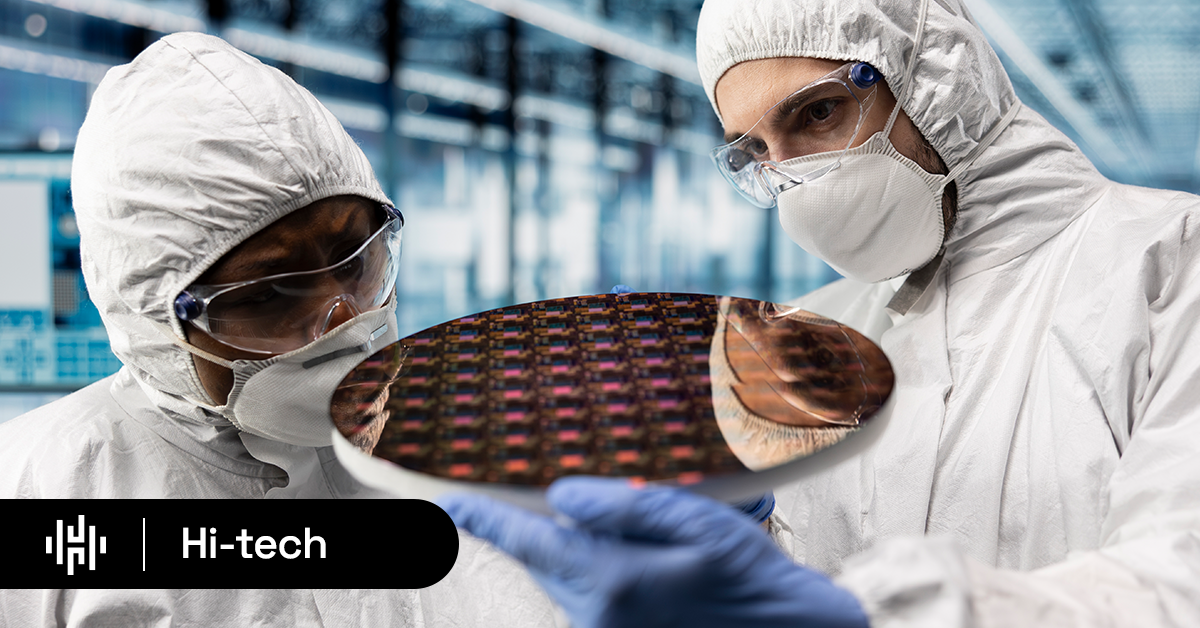

The chipmakers winning the next decade won’t just have the best processes. They’ll have the best data feedback loops.
A semiconductor fab is one of the most instrumented environments on earth. Thousands of sensors. Millions of data points per wafer. And somehow, most yield decisions are still made from a week-old spreadsheet.
A modern fab runs a wafer through 1,000 or more process steps before it becomes a chip. Every one of those steps generates data: chamber temperatures, gas flow rates, etch depths, metrology measurements, equipment alarms, operator notes. A single fab can produce petabytes of this data every year.
And yet, when something goes wrong—a yield excursion, a mysterious defect signature showing up in final test—the response in most fabs I’ve seen looks roughly the same. Engineers pull reports from three different systems that don’t agree with each other, spend two days reconciling timestamps, and eventually land on a theory they can’t fully prove because the data they actually need is locked in a proprietary equipment format that nobody bothered to integrate.
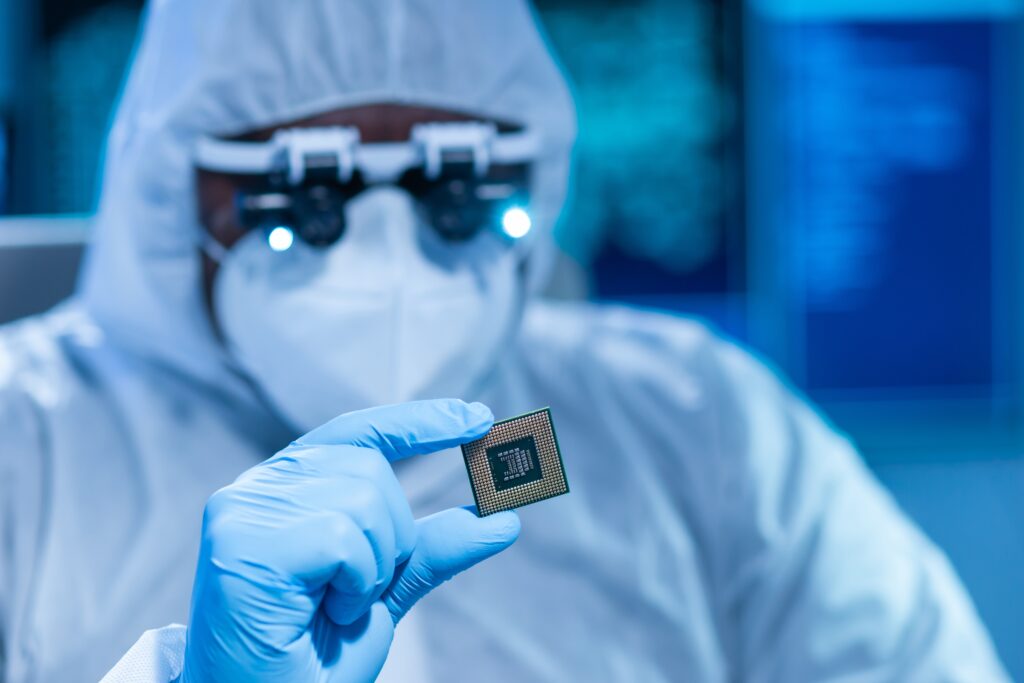
The Data Reality Inside a Fab
Let me be specific about what we’re dealing with, because the scale matters.
The equipment alone—ASML scanners, Lam Research etch tools, Applied Materials CVD chambers, KLA inspection systems—generates continuous streams of time-series data through interfaces like SECS/GEM and SEMI E164 (Interface A), the standard for high-bandwidth structured equipment data access.
That raw stream typically flows through a historian or EDC layer (OSIsoft PI, AspenTech IP.21, or a fab-specific data collection system) before it reaches anything resembling analytics.
Then you have the Manufacturing Execution System, typically Siemens Opcenter or a legacy predecessor, tracking every wafer move, every recipe execution, every hold. SAP or Oracle sitting on top of that for ERP. SPC systems running control charts on hundreds of parameters simultaneously. Metrology tools generating inline measurement data at key process steps. Defect inspection systems producing images and classification results.
None of these systems were designed to talk to each other. Each one has its own data model, its own notion of what a “lot” or a “wafer” or a “step” is. The timestamps don’t always align. The equipment identifiers don’t always match. And the people who know how to extract data from each system are usually different people, sitting in different organizations, with different priorities.
The result is predictable. I’ve sat in yield review meetings where three engineers are looking at three different numbers for the same metric, each pulled from a different system, each technically correct within its own context. Nobody knows which one to trust. The meeting ends without a decision. This happens every week, in fabs that are otherwise running some of the most sophisticated manufacturing processes on earth.
What “Modern” Actually Means
When people talk about modernizing semiconductor data infrastructure, the conversation usually drifts toward cloud migration. Move the data warehouse to the cloud. Retire the on-prem servers. That’s fine as far as it goes, but it misses the point.
The real problem isn’t where the data lives. It’s that the data is fragmented, ungoverned, and effectively inaccessible to the people who need it most. Moving fragmented, ungoverned data to the cloud just gives you fragmented, ungoverned data with a bigger monthly bill.
Modern data architecture for a fab means a few specific things.
It means a single copy of truth. That is, one place where yield data, equipment data, and process data are joined on a common data model, with a shared definition of what a lot number means and how timestamps are normalized. Not five copies of the same data in five different systems, each slightly different, each requiring its own ETL pipeline to maintain.
It means open formats. Apache Iceberg has become the standard I recommend here. Analytics tools, data science environments, and custom applications all need to query this data. Open formats mean any tool can access it without bespoke connectors. The goal is interoperability across your ecosystem, not a migration project every time a new tool enters the stack.
It means real-time and historical in the same place. Yield analysis requires historical context—you need to know what this chamber looked like six months ago to understand what’s happening today. But excursion detection requires streaming data. Those two things need to live together, queryable in a single statement, or you’re back to reconciling outputs from two different systems.
And it means governance by default. Process recipes are crown jewels. Customer allocation data is sensitive. The architecture has to enforce access controls, maintain lineage, and produce an audit trail—not as an afterthought, but as a foundational layer. In an industry where IP theft is a real and documented threat, this isn’t optional.
Three Places This Pays Off Immediately
I’ve seen this architecture applied across a range of use cases, but three consistently deliver fast, measurable value.
Yield analytics is the obvious one. The ability to correlate equipment parameters (chamber pressure, RF power, gas ratios) against defect signatures across thousands of wafer runs is enormously powerful. The analysis that used to take a team of engineers three days now takes an afternoon. More importantly, it surfaces correlations that humans wouldn’t find manually. A subtle drift in a chamber conditioning step, invisible in any single run, becomes obvious when you’re looking at 50,000 runs with a consistent data model underneath.
To be clear: most leading fabs already run FDC (Fault Detection and Classification) and APC (Advanced Process Control) systems—KLA Klarity, Applied Materials Centurion, PDF Solutions Exensio. These are mature, valuable tools. The argument here isn’t that modern data architecture replaces them. It’s that it makes them dramatically more useful by connecting their outputs to yield data, supply chain signals, and customer demand in ways those point solutions were never designed to do.
Predictive maintenance is where I’ve seen some of the most dramatic ROI. Equipment downtime in a fab is catastrophic, and an unplanned tool outage can cost millions of dollars in lost throughput and scrapped wafers. The data to predict that downtime is already being generated. Vibration signatures, power consumption patterns, process result trends all contain early warning signals. The problem is that the maintenance history lives in one system, the equipment sensor data lives in another, and nobody has ever joined them. When you do, the models are tractable. The data foundation is the hard part. Once it’s in place, the modeling follows.
Cycle time and capacity forecasting is the one that gets the most attention from executives, and for good reason. The chip industry’s boom-bust cycles are legendary. The 2021–2023 whipsaw, where companies went from desperate shortage to painful oversupply in under 18 months, caught nearly everyone off guard. The firms that navigated it best weren’t necessarily smarter. They had better visibility into their own fab throughput, better connections to customer inventory signals, and better models for translating demand signals into capacity decisions. That visibility starts with the data architecture.
The Collaboration Layer Nobody Talks About
Here’s something that rarely makes it into the architecture discussions: semiconductor manufacturing is not a solo sport.
An IDM or fabless company works with foundry partners, OSAT providers, equipment suppliers, and EDA vendors. All of them need data. The equipment supplier needs process data to help debug a yield issue. The OSAT needs package design specs and test limits. The foundry needs customer priority signals to schedule capacity. The EDA vendor needs silicon measurement data to close the loop on their models.
The traditional way this gets handled is embarrassing. FTP drops. Shared drives with no access controls. Email attachments with Excel files that are immediately out of date. I’ve seen multi-billion-dollar companies sharing sensitive process data with their equipment suppliers via a shared folder that fifteen people have the password to.
The modern approach is governed data sharing—giving partners a live, read-only view of exactly the data they need, with access controls enforced at the platform level, full audit trails, and no data movement. No bulk export. No persistent copies on the partner’s side. The partner queries in place and when the collaboration ends, you revoke access. It sounds simple because it is, once the architecture supports it.
A client described this scenario to me recently: a persistent defect issue with a specific etch tool vendor. In the old model, the process would have taken weeks, between data extracts, back-and-forth emails, and NDAs over what could be shared. Instead, the equipment supplier’s process engineers had governed access to the relevant chamber data within a day. They found the root cause in days, not weeks. The fix went in the following week. That’s not a marginal improvement. That’s a fundamentally different way of operating.
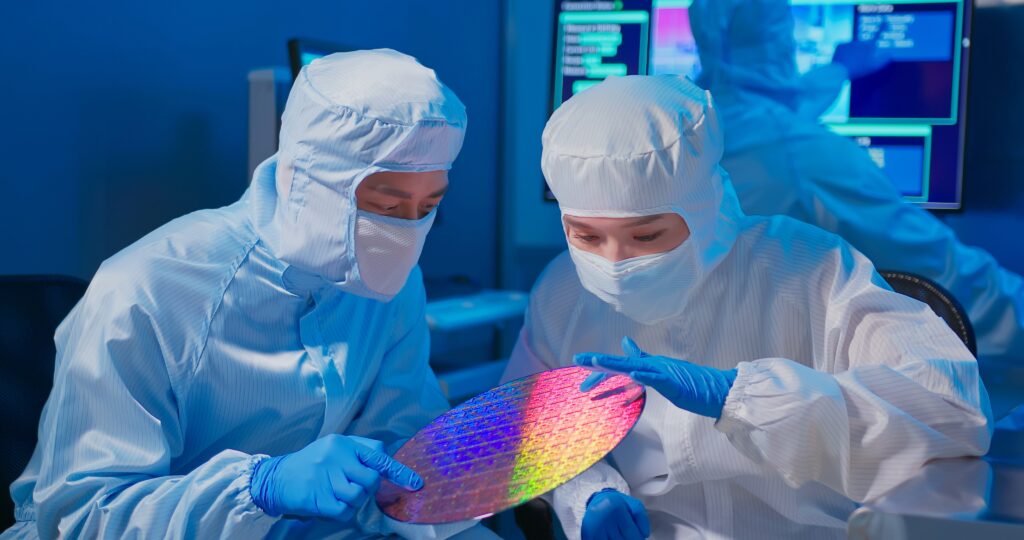
Where to Start
The biggest mistake I see teams make is trying to do everything at once. One company I worked with spent 18 months building a comprehensive data model that covered every system in the fab before they had a single analyst using it. By the time it was done, half the requirements had changed.
Pick one high-value data domain. Yield data from a single process module is a good starting point. It’s well-understood, the ROI is clear, and the stakeholders are motivated. Build the data model for that domain. Instrument lineage and governance from day one, not as a retrofit. Get analysts using it. Prove the value in 90 days; a working proof of concept is achievable in that window. Production deployment typically takes six to nine months once you factor in security reviews, change control, and validation requirements. That’s not a reason to delay starting; it’s a reason to start now.
Then expand. The architecture scales. The organizational muscle doesn’t build itself, but it builds faster once people have seen what good looks like.
The goal is a connected platform where fab operations data, supply chain signals, R&D results, and customer demand data all live in one place, governed, accessible, and queryable by the people who need them. That’s not a distant vision. The technology to do it exists today. The barrier, almost always, is organizational — the willingness to establish common data models, retire redundant pipelines, and treat data as a shared asset rather than a departmental possession.
The fabs that figure this out first won’t just have better analytics. They’ll make better decisions, faster, with more confidence. In an industry where a single percentage point of yield improvement can mean hundreds of millions of dollars at leading-edge nodes, and where the difference between catching an excursion on Monday versus Friday can mean an entire lot of wafers, that matters.
The precision is already there. The data is already being generated. The question is whether you’re doing anything useful with it. What does your data architecture look like today, and where’s the biggest gap?
Talk to one of our industry-first data experts to start closing that gap today.